

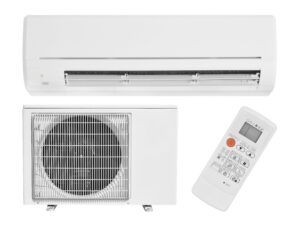
If you are considering a ductless mini-split, it is natural to wonder how large the equipment is and how it will look in your home. The quick answer is that indoor units are compact, outdoor units are smaller than most traditional condensers, and there are several mounting styles to match your space and style. Below is a practical ductless mini-split size and fit guide, plus placement and aesthetic tips from the Airquip team.
The Main Components
A ductless system has three essentials:
- Outdoor unit: often called the heat pump. It provides cooling in the summer and heating in the winter.
- Indoor unit: often called the air handler or head. It delivers the conditioned air to the room.
- Line set and drain: small refrigerant lines, control wire, and a condensate drain that connect the indoor and outdoor units.
What It Looks Like In Real Homes
Outdoor unit
Think of the outdoor ductless unit as a compact rectangle that can sit on a small pad or mount to a wall bracket. Because it is shorter and narrower than many traditional condensers, it often tucks neatly beside or behind the house.
Indoor unit

- Single room solution: a high wall unit near the ceiling, often placed on an exterior wall for a short line run. We typically mount it several inches below the ceiling and a few inches from a corner to minimize visual presence while maintaining good airflow.
- Open concept spaces: placement is more central to distribute air evenly.
- Low-wall units: good for rooms with limited wall height
- Ceiling cassettes: a clean, built-in look when ceiling access allows.
Line Sets, Aesthetics, and Concealment
The refrigerant and control lines are small, flexible, and much easier to route than ductwork. When surface routing is the right choice, we use slim protective covers that can be selected in neutral colors and can be painted to match siding or interior finishes. Indoors, careful placement and trim work keep the look clean and intentional.
Noise Levels and Comfort
Homeowners are often surprised by how quiet ductless systems are. Indoor units commonly operate in the mid-20s to low-40s decibels on typical fan speeds, which is comparable to a library or soft conversation. Outdoor units are engineered for low vibration and quiet operation. The result is consistent comfort with minimal background noise.
How We Help You Choose the Right Size and Style
The best ductless mini-split is the one that fits your room size, your insulation levels, your layout, and your aesthetic goals. During an Airquip consultation, we will:
- Measure and evaluate the spaces that need added comfort.
- Review mounting options, clearances, and line routes.
- Share exact dimensions for the models that match your needs.
- Provide a design that looks good and performs well in Rochester’s climate.
Ready to Visualize It in Your Space?
Contact us to schedule your in-home assessment or request a personalized layout and model recommendation.